

Hello, and welcome to this blog. We are 6 Computer Science students at the University of Nottingham, currently in our 2nd year. This blog aims to detail the development process of our 2nd year group project.
What is the project?
For our 2nd year group project, we were presented with multiple expressions of interest for projects working with outside companies (or people within the university). After choosing 3 of them we were interested in doing, we pitched why we thought we were suitable for each of them. In the end, we chose to work with IBM on the ‘Missing Maps’ project.
What is Missing Maps?

Missing Maps is an existing project that aims to map areas that are vulnerable to disease and natural disasters, for example. The humanitarian aspect of this project really stood out to us, as did the prospect of working with IBM and using IBM Watson.
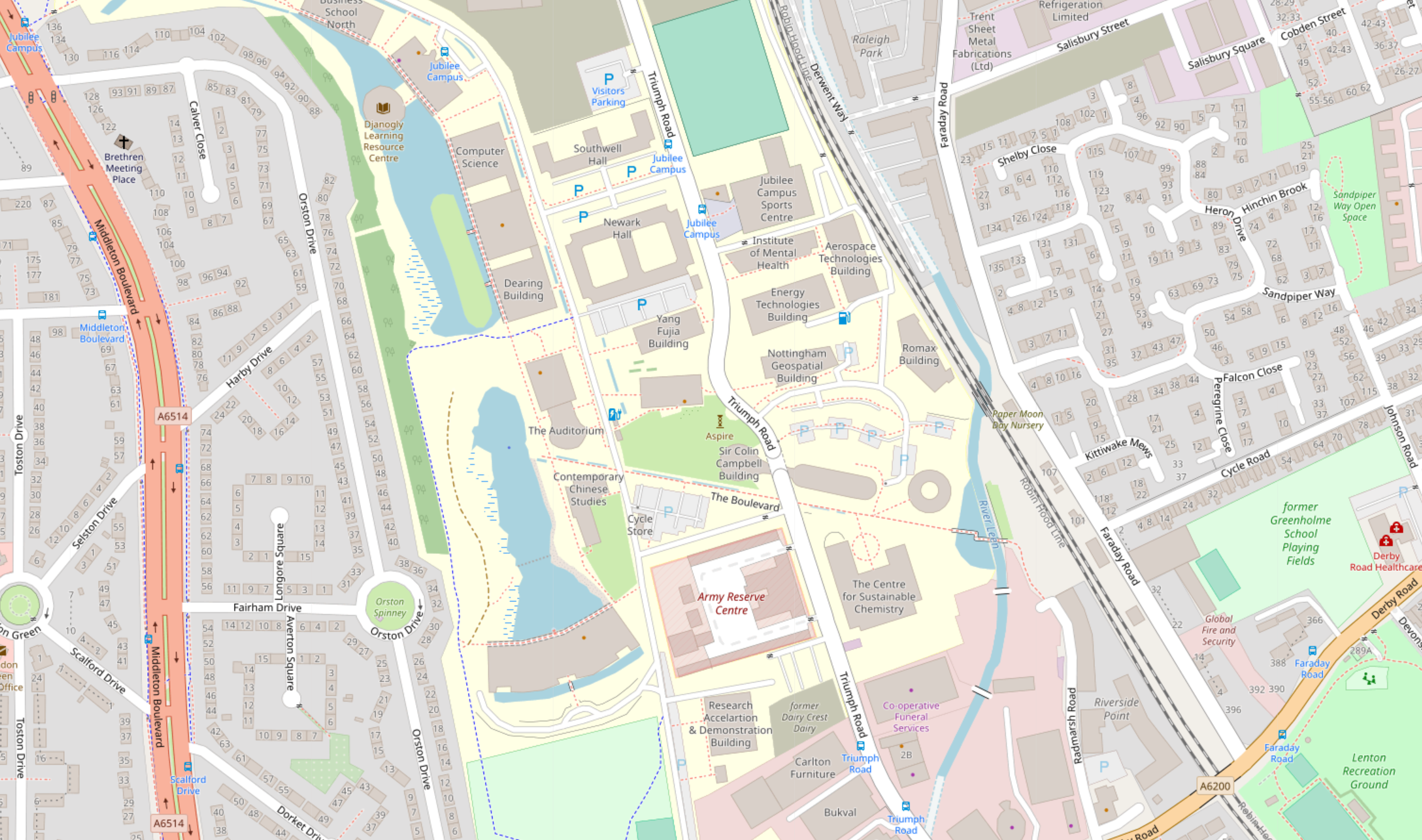
It uses OpenStreetMap – an open, collaborative project that aims to map the whole world. Missing Maps involves volunteers tracing satellite imagery onto OpenStreetMap, and then adding detail such as evacuation centres, as the website describes. Then, humanitarian organisations (e.g. the Red Cross) utilise this information in their efforts, such as reducing risk in target areas and planning disaster response activities. Essentially, if a disaster occurs, these organisations are better equipped to help people in vulnerable areas, using the information provided by OpenStreetMap.
What are we doing?
Currently, the mapping process is manual – done by volunteers. It would be better if the process was done automatically – this is where we come in.
The thing that we will be working on is a web-based application that allows a user to input a satellite image of however large they want. The application then sends the image to a custom image classifier, using IBM Watson, which then classifies the image based on whether it is habitable or not. Then, the classifier returns the image to the front-end, which displays an output report, giving the result of the classification and any further details.
This blog aims to document the development process, not only of how we are making the application, but any research that goes into it too.
About us
The team is as follows:
- Tom Dudley, team leader and git-master.
- Yi Ding, team admin.
- James Abbott, lead front-end dev.
- Peter Hare, lead data scientist.
- Sen Lin, data scientist and developer.
- Luke Ellis, blog-master and front-end dev.
We are also working with:
- John McNamara, Senior Inventor at IBM
- Mercedes Torres Torres, Our Supervisor
We are looking forward to bringing this project to fruition, and creating something that could benefit people in real life. Thank you reading our blog! 🙂
Links:
- Our Trello board: http://bit.ly/2yU7jBK
- Our document archive: http://bit.ly/2qEDXCZ
- We also have a Github repostitory, for version control: https://github.com/Carbsta/NottsMissingMaps
 UoN Missing Maps Project